Organise by use rather than sender
Create a simple structure for outward travel, accommodation, activities and the return journey. Use filenames containing a date and recognisable purpose, such as a station or property name. A booking platform's name alone is of little help when several different services were purchased through the same provider.
Add a brief overview with the essential dates and references to the original documents. It should show where you need to be and which file belongs to each step. Keep original confirmations unchanged. Your summary is a navigation aid, not a substitute for a ticket or the conditions associated with a booking.
Separate current and superseded versions
After changing a booking, label the replacement clearly and move older documents into a separate area. Do not delete them prematurely if they may be needed for an enquiry or accounting. The everyday view, however, should make the current arrangements prominent rather than presenting every historical version as equally usable.
Check dependent details after an alteration: accommodation date, arrival message, reservation and shared calendar. A new train ticket can make several notes outdated. Carry the update through once rather than relying on a mixture of old messages and new attachments while travelling. This is especially useful on trips with several overnight stops.
For a shared trip, decide who manages the main booking and who needs which documents. Do not distribute every person's private information to the whole group without a reason. A common overview containing times and addresses may suffice while individual documents remain with the people concerned. Access should follow the task, not simply membership of a group chat.
Test offline access rather than assuming it
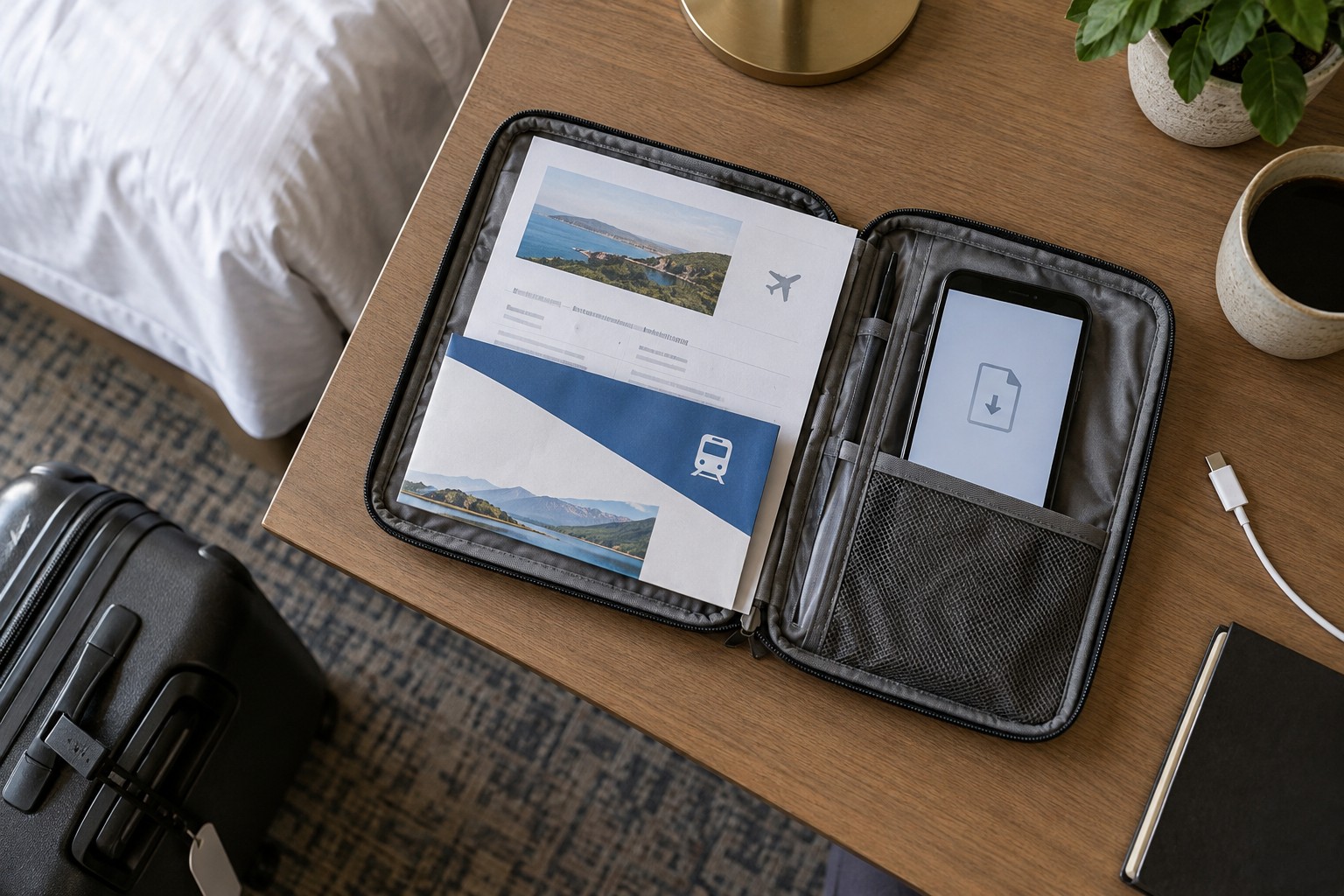
Download the required files and open them without an internet connection. A cloud link or email subject does not establish local availability. For tickets, also check the format accepted by the provider. DB, for example, distinguishes official PDF tickets from mobile-phone tickets; an arbitrary screenshot is not a universal replacement.
Back up important information in a way suited to your devices and needs. Protect the device with an appropriate lock and avoid sharing sensitive access details unnecessarily. After travelling, end permissions that are no longer required and archive the documents coherently. The next trip can then begin with a clear system rather than the digital remains of many previous bookings and confusingly similar attachments.