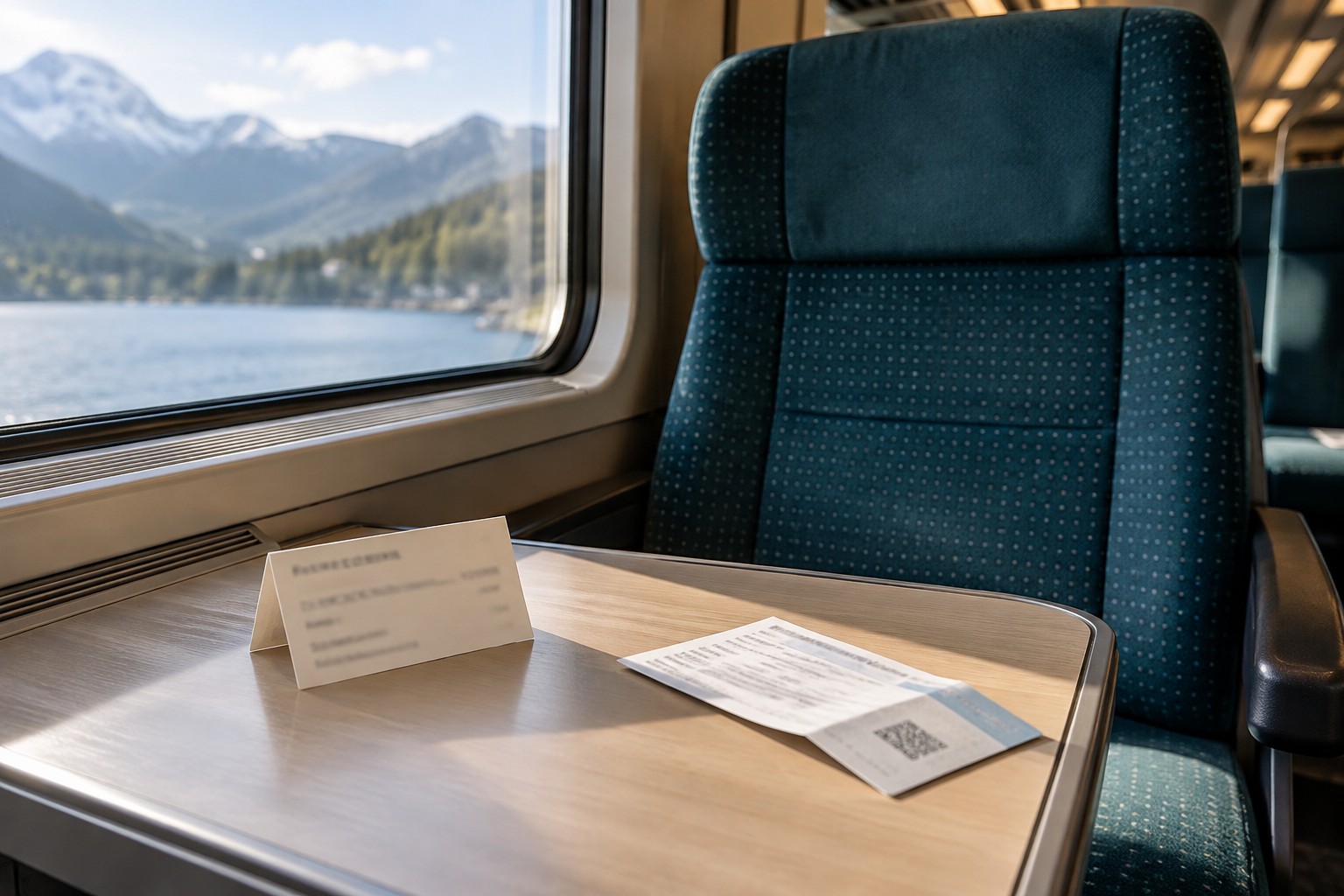
Match the notice to your booking
Check the train number, date and affected section. An alteration may concern only part of a route or an individual stop. Compare the official notice with your saved itinerary and local displays. Keep the booking available so that you can describe the intended journey accurately when asking for assistance.
Record where you are and which later commitments depend on the cancelled service. These may include connecting trains, assistance, accommodation or an appointment. This overview helps identify the most important next decision. Searching for a replacement seat is premature if the onward route from that train has not yet been checked.
Separate an alternative route from ticket permission
Search for current options to the destination and examine the entire remaining journey. A suggested service may use a different route, require another reservation or involve another operator. Appearing in a timetable does not by itself establish that your existing ticket can be used on it.
Ask the responsible provider about permitted onward travel where conditions are unclear. Describe the tickets you actually hold, particularly if they were purchased separately. Rules recalled from another situation should not be treated as a promise for yours. DB directs passengers to its official information for current passenger-rights procedures and conditions.
A bicycle, wheelchair space, booked assistance or overnight accommodation creates additional requirements that must still be met. An alternative train with room for a passenger does not automatically resolve those needs. Clarify the decisive points before moving to another station or paying for another booking that may not suit the complete journey.
Keep records without losing the next action
Retain original tickets, relevant notices and confirmations you receive. Note the time and substance of important advice as precisely as possible. If you incur additional costs, keep receipts. That does not imply automatic reimbursement; the records initially provide a clear basis for a later enquiry about your particular circumstances.
Tell accommodation providers or affected companions when a reasonably reliable revised arrival becomes available. A short message with the current position is more helpful than several unconfirmed estimates. If no suitable alternative has been established, say that clearly and agree when you will update them rather than presenting a guess as a confirmed plan.
Carry the revised plan through
Once onward travel is settled, update the train sequence, platforms and arrival route in your overview. Recheck reservations and the final local connection. Keep superseded information separate so that an old document does not accidentally become the basis for your next decision.
After the journey, address outstanding reimbursement or complaint questions through the official process. Separate that follow-up from the immediate task of continuing the trip. While travelling, the priorities are a permitted route, accessible assistance and a clear sequence of actions. The precise legal assessment depends on the individual case and should not be inferred from a general travel-planning article.