Choose contents for one specific day
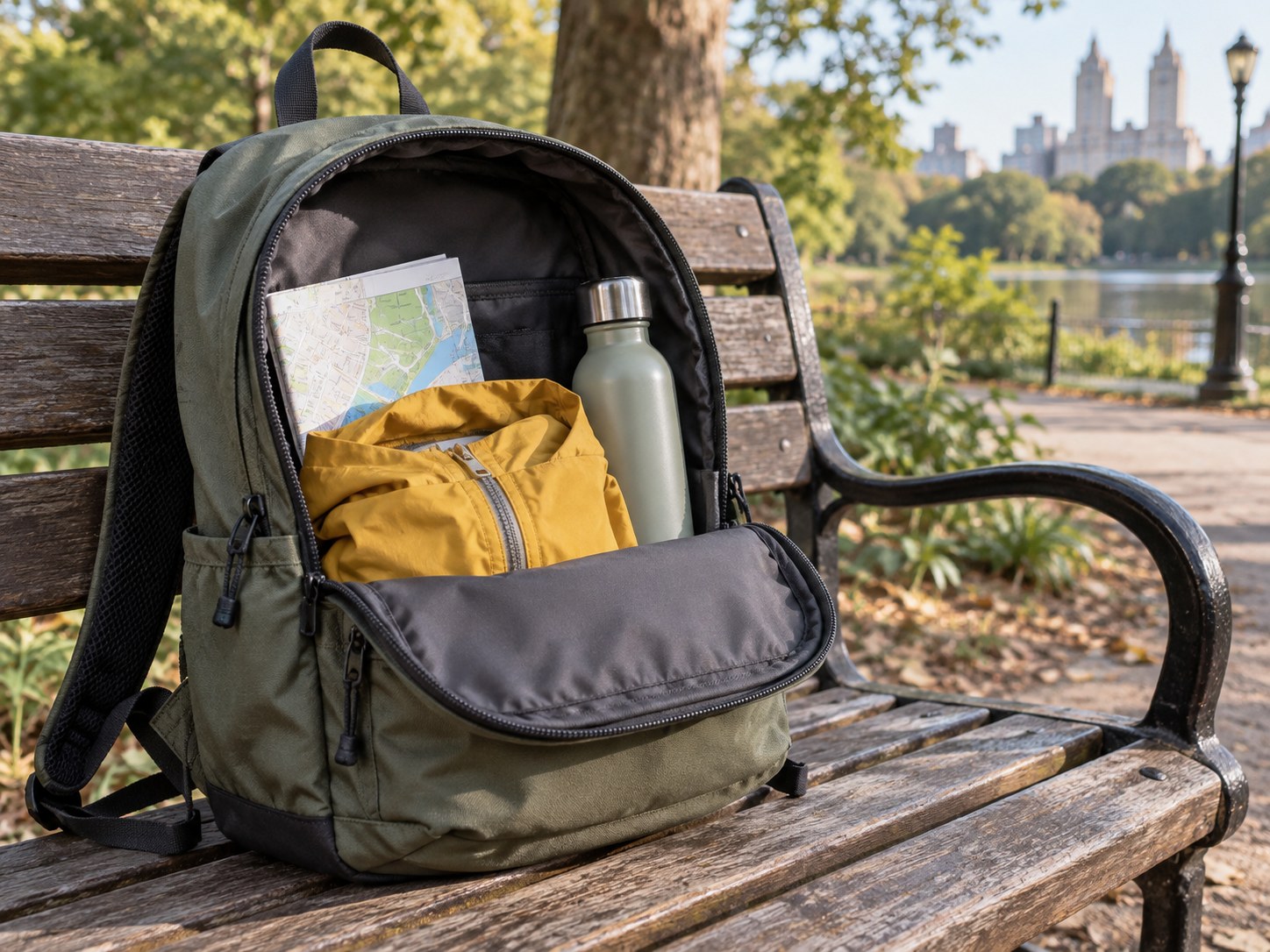
Lay out a water bottle, an additional clothing layer, compact rain protection and the personal items you actually need. If you bring a camera, include its protection as well. This example is more useful than a universal capacity recommendation: a large rigid bottle requires a different shape from a small folding pouch.
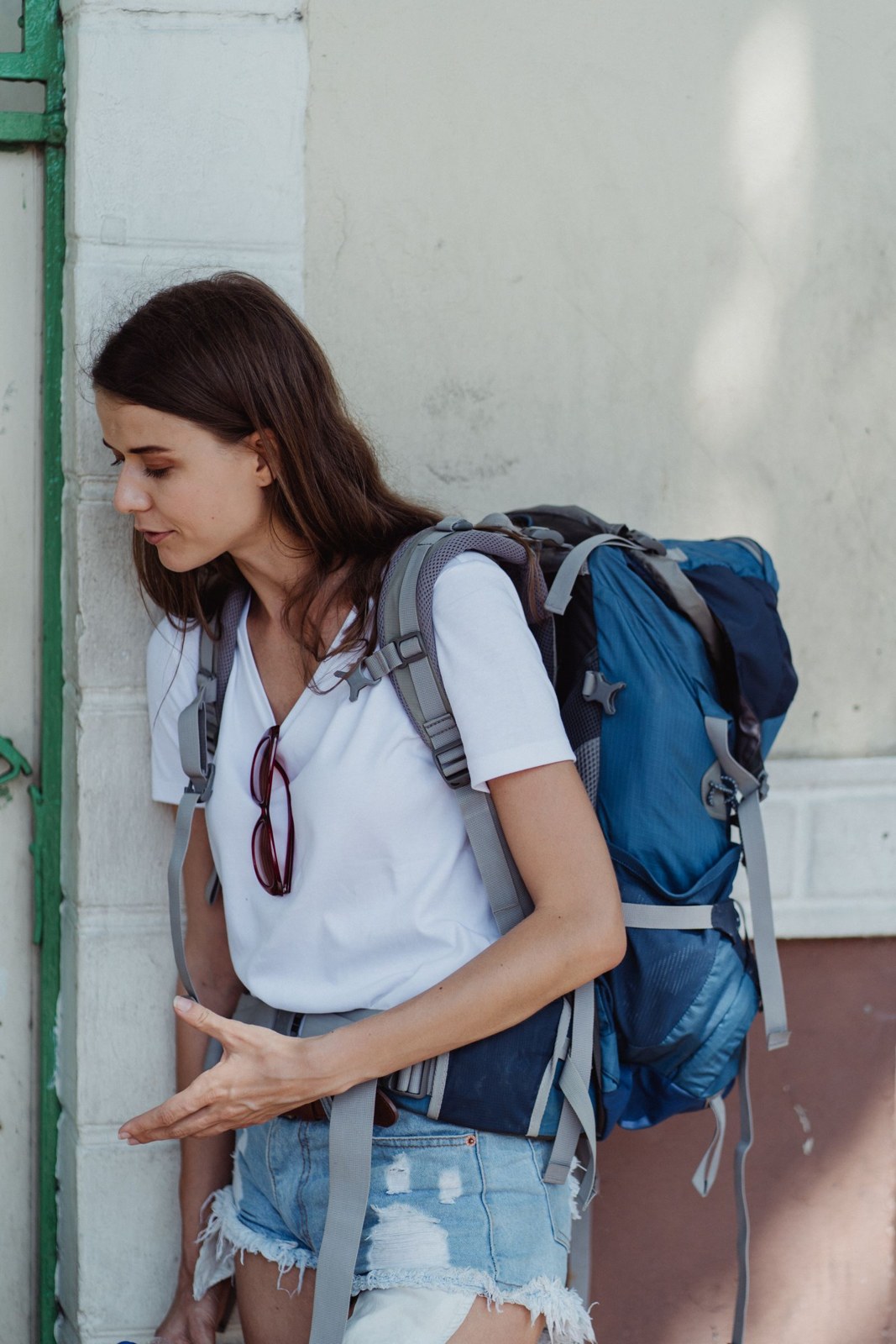
First check whether a bag you already own is sufficient. A larger travel backpack may feel comfortable when empty but remain deep and cumbersome. If you plan to use it as a daypack, the unused space should compress in a controlled way. Loose straps should not catch unnoticed when boarding transport or moving through narrow interiors. Test the packed shape rather than judging only by empty weight.
Compare access and carrying behaviour
Put a full bottle in its intended pocket and lean forward carefully. Does it stay secure? A deep pocket is of little value if the object slips out when you set the bag down normally. Avoid hanging all heavy items on one side. Also check whether the contents remain organised after you remove your jacket or move around freely in the extra space.
Back padding can make carrying more comfortable, but takes up space itself. Very thin folding packs save weight in your main luggage, while transmitting the shape of hard objects more directly to your back. That may be acceptable for a light jacket and snack; a camera and heavy bottle can change the decision. Try the combination you actually intend to carry.
Reach for the phone or ticket compartment while wearing the pack realistically. Not every item needs to be accessible while walking. It matters more that you can stop somewhere suitable, open the bag and retrieve an item without other belongings falling out. Numerous outer pockets only improve organisation when you consistently remember which contents belong in each.
Consider the places you will enter
Museums and other indoor venues may have their own bag rules. Check the individual venue instead of assuming that one particular daypack size is accepted everywhere. A small separate pouch for essential personal items may help if you have to leave the main bag in storage. In narrow spaces, carry the pack so you can control its distance from people and displayed objects.
At the end of the day, review anything you never used. Items included purely from habit may be able to stay in your room next time. Adjust the load to the weather and route. A suitable city daypack starts with a limited job and a realistic load, rather than the largest possible number of compartments and additional features.