Look beyond a soft sole
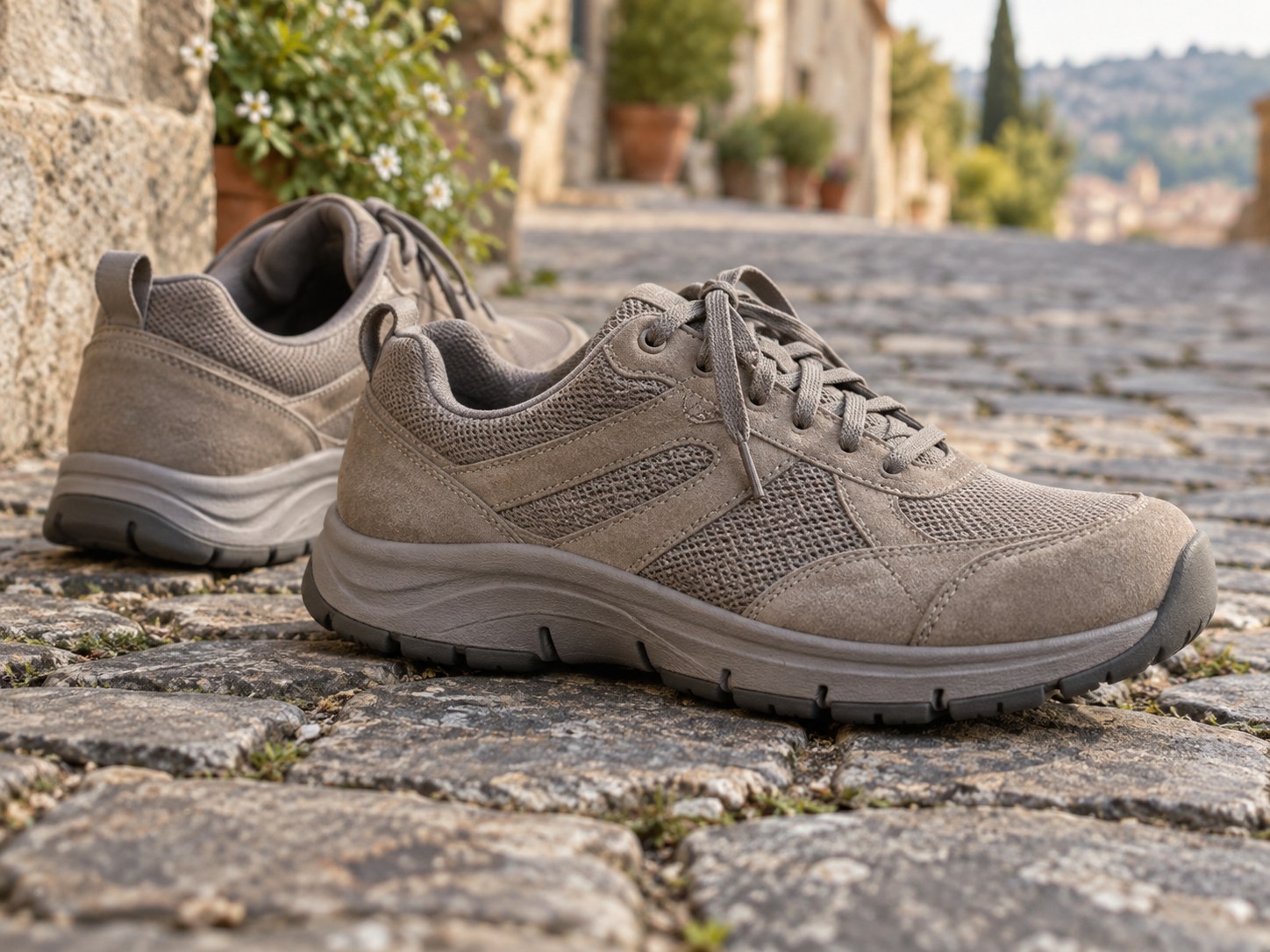
Do not judge only by pressing a thumb into the cushioning. What matters is how the whole shoe fits and behaves while walking. Your heel should not continually lift, while the front of the foot needs enough room. A shoe can feel soft when you first step into it and still press against a seam after a longer walk.
Try both shoes and lace them as you would during the trip. Walk for several minutes, turn and use a small step if one is available. Pay attention if your feet slide forward when stepping down. Do not assume that a clearly uncomfortable shoe will automatically become suitable through breaking it in. The trial should reveal a workable fit rather than a problem you hope time will fix.
Consider socks, weather and weight together
Bring your intended travel socks to the fitting. Their thickness and seams affect how the shoe feels. If you expect to alternate between thin and much thicker socks, the fit needs to work with both. A size that suits you in another shoe model is not enough evidence that this pair will behave the same way.
More enclosed footwear may be useful in cool, wet conditions, while ventilation matters more in warm weather. Consider how long the material takes to dry after a shower and where you could dry it in your accommodation. A second pair takes considerable luggage space, so it should fulfil a recognisably different purpose rather than being packed simply out of uncertainty.
The tread should suit ordinary city routes. A very aggressive sole does not automatically make a shoe more comfortable on smooth indoor floors. Look for stable movement during normal use without treating appearance as a guarantee against slipping. Wet surfaces require care regardless of which footwear you choose.
Make a longer trial before departure
Wear the selected pair on several everyday journeys before relying on it for a full sightseeing day. Carry your daypack too. This makes it easier to notice pressure points, loose lacing or unfamiliar strain. A brief circuit around your living room does not reproduce a travel day adequately.
Keep sitting breaks and shorter alternative routes in your plans. Even well-fitting footwear does not remove the need to rest. Persistent discomfort or particular requirements call for individual professional advice rather than a general shopping recommendation. After a trip, note which pair was comfortable and which weather caused problems. Those observations will be more useful for the next purchase than a universal ranking of supposedly best travel shoes.