Begin with a manageable central area
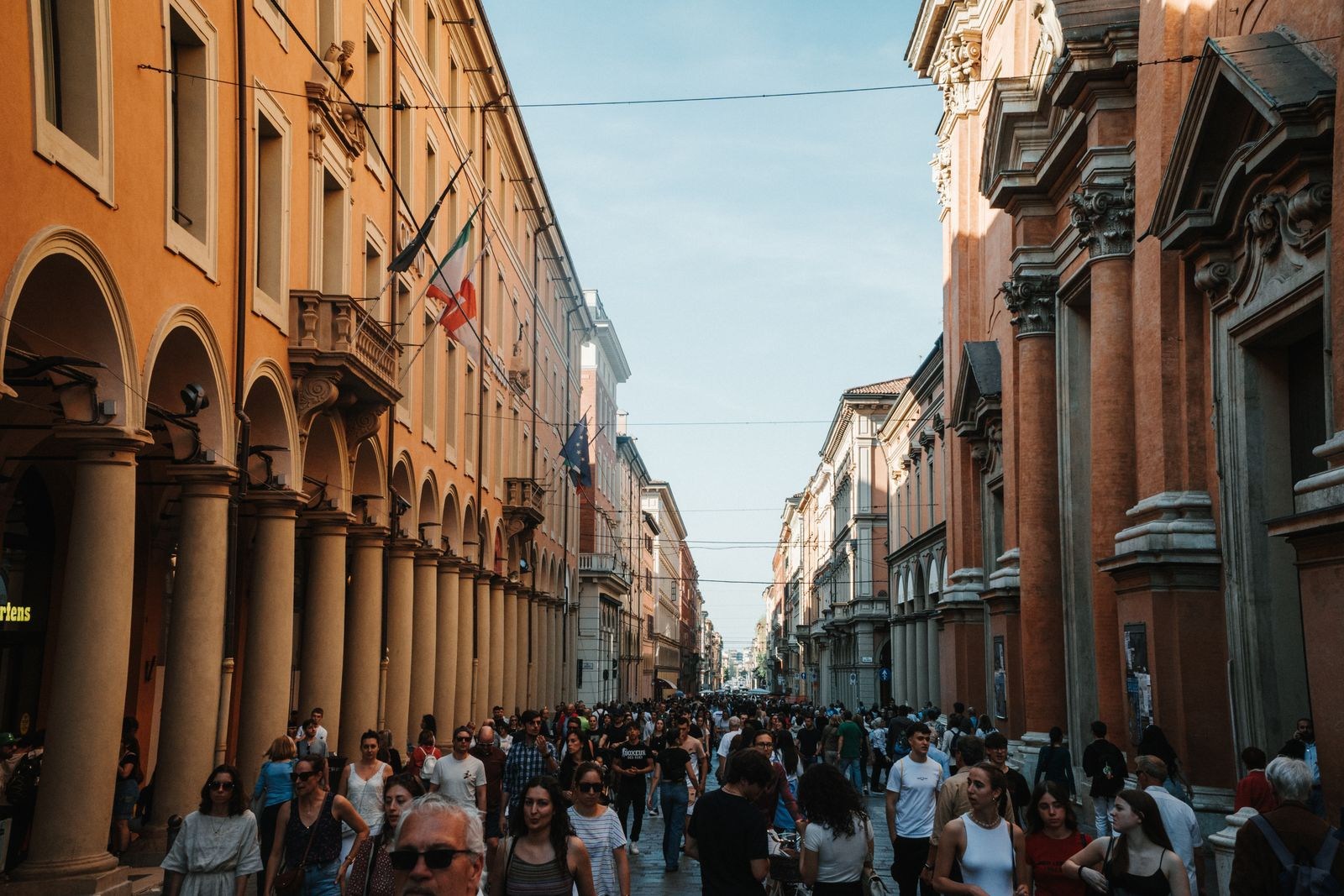
Around Piazza Maggiore, a first walk can be combined with the neighbouring Quadrilatero. Its closely grouped streets contain food shops and places to eat. Start without a large shopping bag and decide whether you want something to eat immediately, something to take away later or simply time to look. Those intentions call for different breaks and carrying arrangements.
Avoid planning an extensive lunch immediately after several substantial tastings. A deliberate choice leaves more room for what actually interests you. For a particular restaurant, check its own opening days and reservation conditions. A lively neighbourhood does not guarantee that your preferred establishment will have a table at the moment you arrive.
Look closely beneath the porticoes
Continuing towards Santo Stefano links more streets with a distinctive square and church complex. Notice changes in width, ceilings and transitions rather than trying to accumulate the greatest distance under cover. A short section with time to observe can be more interesting than a long route treated only as shelter from the weather.
Porticoes do not make every route entirely rainproof. Crossings and open squares remain part of the journey. Nor should you assume every shop provides somewhere appropriate for a prolonged break. Choose an open visitor attraction or café when you want to stay indoors. The covered passage itself remains a shared route used by other people going about their day.
Treat San Luca as a separate outing
The portico towards San Luca leads out from the inner centre and uphill to the sanctuary. This is a different undertaking from a short stroll between central squares. Allow for the climb, return journey and sufficient water. A large meal immediately before the ascent may not be the most comfortable sequence.
If you want to walk it, leave a separate half-day available and keep the rest of the schedule light. The actual duration depends on your starting point, pace and pauses. Investigate transport alternatives beforehand if you prefer to walk only one direction. An improvised shortcut should not be the only solution if the route proves more demanding than expected.
Time purchases around the walk
Buy delicate or heavy food items after the longer walk where possible. Consider how they will reach your accommodation and later travel home. Confirm a room fridge or suitable carrying arrangement if the purchase depends on it. Cross-border travel can also involve import conditions; buying something from a shop does not remove those requirements.
A meal in the neighbourhood where the day finishes may be enough for the final activity. This allows food and porticoes to become parts of the same city visit rather than competing lists that repeatedly pull you in different directions.